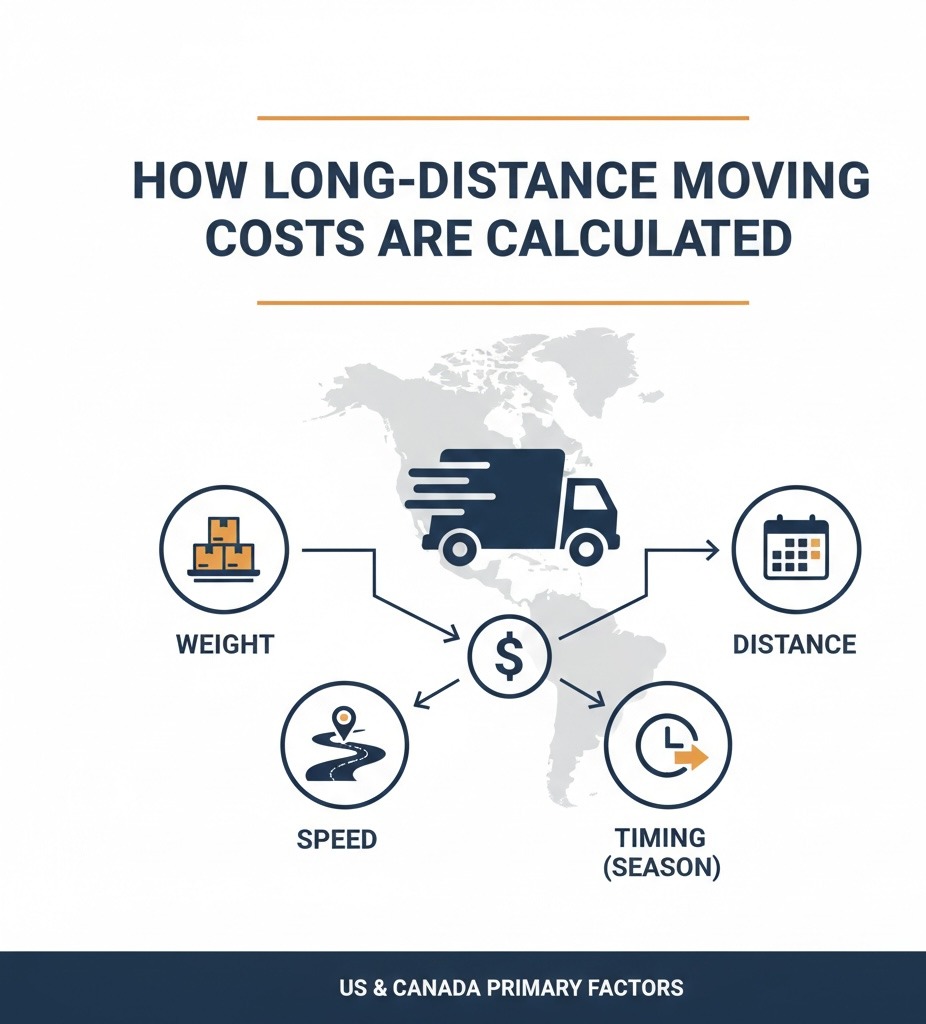
How Long-Distance Moving Costs are Calculated in the US and Canada
Relocating to a new state or country is a major life event. When planning a move in North America, understanding how moving companies calculate their pricing is essential for budgeting. Unlike local moves, which are often billed hourly, long-distance moves follow a different set of rules.
Primary Factors Influencing Moving Costs
According to industry standards, several core factors determine the final estimate provided by a professional moving company.
1. Weight of the Items to be Moved
In the United States and Canada, the weight of your belongings is the most significant factor. Moving companies use certified scales to weigh the truck before and after loading your goods. The difference is the “net weight” of your shipment. Professional movers usually provide a price per pound or per hundred pounds (cwt).
2. Distance Between Locations
The total mileage between your current home and your destination plays a crucial role. This covers fuel costs, wear and tear on the vehicle, and the labor hours required for the drive. Long-distance moves (also known as interstate moves) are regulated, and pricing often follows tariff guides based on distance brackets.
3. Speed and Logistics of the Move
If you require “expedited delivery,” where you need your items by a specific date, the cost will increase. Standard long-distance moves often involve “consolidated shipping,” where one truck carries items for multiple customers to save costs. If you want a dedicated truck for a faster move, expect to pay a premium.
4. Timing: Seasonality and Peak Dates
The timing of your move can drastically change the price. The “Peak Moving Season” in North America runs from May to September. During this time, demand is high, and prices can be 20-30% higher. Similarly, moving at the end of the month or on weekends is generally more expensive than a mid-month, mid-week relocation.
Additional Services and Hidden Costs
Beyond the basics, moving companies offer all-inclusive services that add value but also increase the total bill:
- Packing and Unpacking: Professional packing of fragile items using specialized materials.
- Valuation Coverage: Protection for your goods in case of damage (similar to insurance).
- Storage-in-Transit (SIT): If your new home isn’t ready, the company stores your goods in a warehouse.
- Accessorial Charges: Costs for elevators, long carries, or stairs.
Industry Regulations (FMCSA and Beyond)
In the US, interstate movers must be registered with the Federal Motor Carrier Safety Administration (FMCSA). They are required to provide you with a booklet called “Your Rights and Responsibilities When You Move.” This transparency ensures that the weight-based and distance-based pricing is fair and audited.
Conclusion
To get the most accurate quote, always request an in-home or virtual survey. Understanding that weight, distance, speed, and timing are the pillars of moving costs will help you negotiate a better deal and avoid moving scams.
Author Note: This guide is designed to help consumers understand the complexities of the moving industry in North America. For more information on professional relocation services, contact your local certified moving company.
Note: As an international relocation and logistics specialist, Trusted Movers UAE provides this comprehensive guide to help customers and researchers understand the industry-standard pricing models used in the North American (US & Canada) moving market.